November 18, 2026 | News & Insights

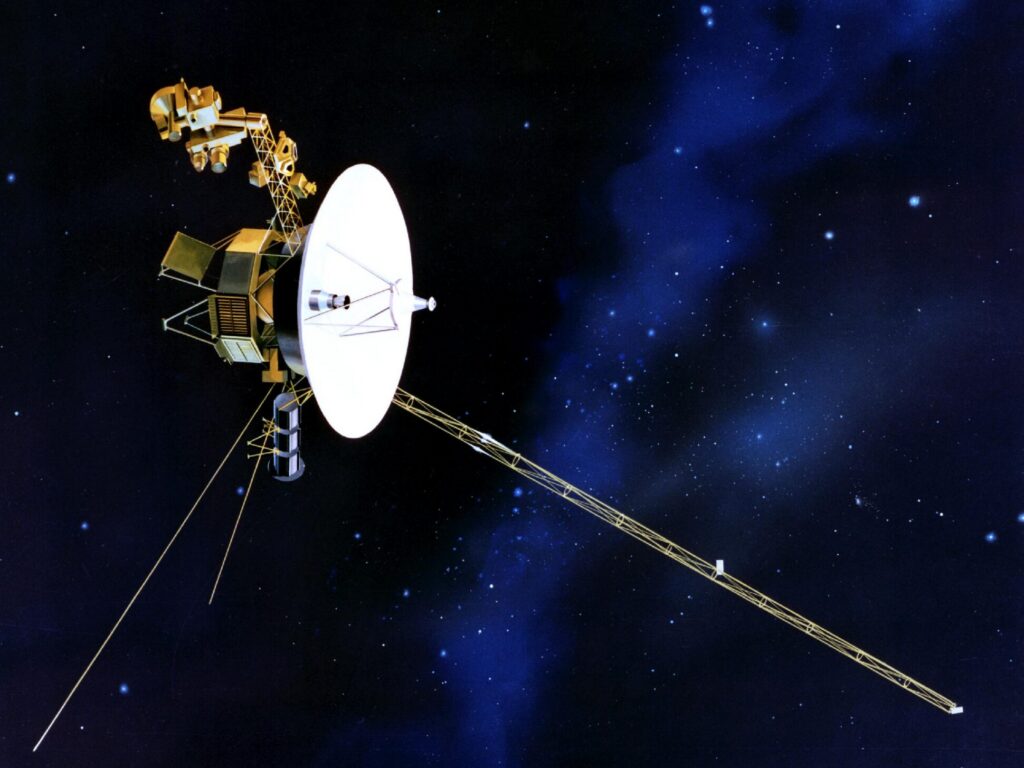
NASA’s Voyager 1 has reached an extraordinary milestone, becoming the first human-made object to travel one light-day from Earth. After nearly 50 years in space, the spacecraft is more than 16 billion miles away, so distant that a radio signal takes 24 hours to reach it.
FreeFall Aerospace is proud to share a new Scientific American article by our co-founder, Dr. Christopher K. Walker, professor of astronomy at the University of Arizona.
In the article, Chris reflects on Voyager 1’s remarkable journey and its lasting significance for humanity. Beyond its scientific discoveries, Voyager carries the Golden Record, a collection of images, sounds, music, and greetings from Earth meant to tell our story to anyone who might someday encounter it.
Looking toward the future, Chris also introduces LUMEN (Lunar Uranus Membrane Envoy), an innovative solar-sail spacecraft concept his student team at the University of Arizona is developing. Designed to travel faster than Voyager 1, LUMEN could carry an extensive archive of human knowledge into interstellar space while gathering valuable scientific data along the way.
FreeFall Aerospace was founded on pioneering research from the University of Arizona. Chris’s ongoing work in space science embodies the spirit of curiosity and innovation that drives FreeFall Aerospace.
We congratulate Chris on his Scientific American publication and invite you to explore his perspective on this historic milestone and the possibilities ahead.
Read the full article in Scientific American: Voyager 1 Reaches ‘One Light-Day’ Milestone